Table of Contents
- First Encounter with “Breakthrough Thinking”: Starting with Curiosity
- Continuous Questioning: The Root of Creativity and Problem Solving
- From Go to Life: Think Before You Act
- Bravely Facing Wins and Losses: Forging Your Own Path
- Talent and Virtue: The Importance of Upholding Principles
- Character in the Workplace: How Thoughts Shape Actions and Choices
- Post-Game Reflection and Growth: Moving Beyond the Emotions of Winning and Losing
- When the Student Surpasses the Master: Rebuilding After Losing Everything
- Conclusion: The Value of Mindset Over Method
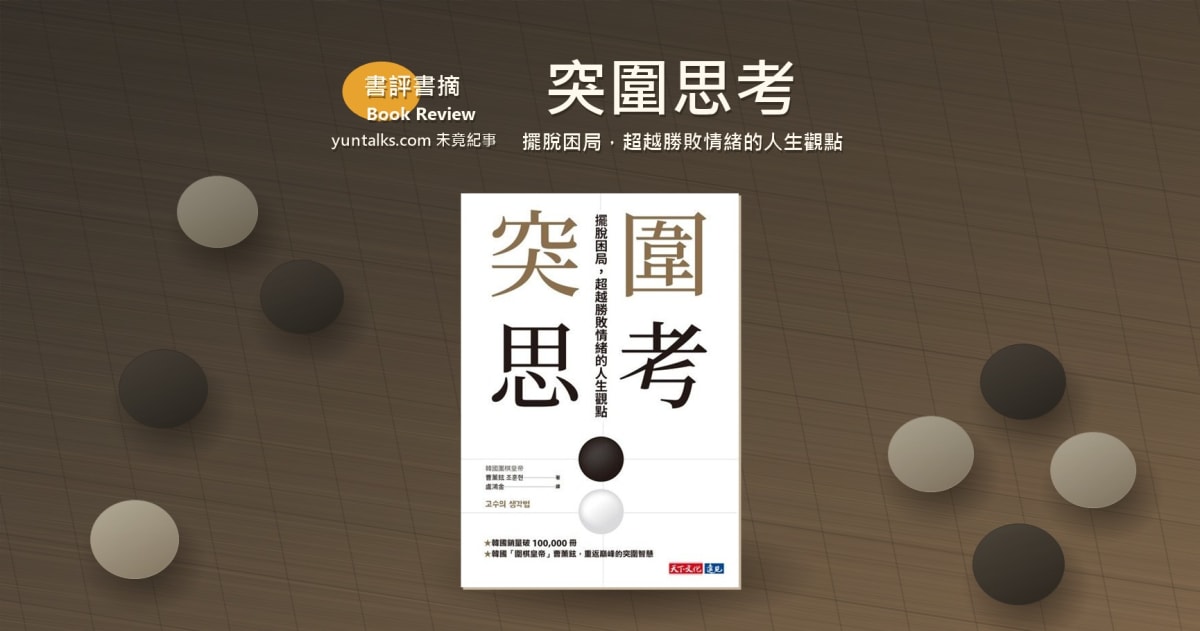
I know very little about Go (Weiqi / Baduk). All my knowledge comes from anime about Go that I’ve watched. I picked up “Breakthrough Thinking: A Life Philosophy to Overcome Difficulties and Transcend Emotions of Winning and Losing (고수의생각법)” not because of the author’s fame, but out of curiosity about what a professional Go player would write about.
First Encounter with “Breakthrough Thinking”: Starting with Curiosity
Korean Go master Cho Hun-hyun (조훈현) holds records for the most wins in matches and the most major tournament titles in the world, and is considered the strongest player of his generation. This book shares ten insights he gained from his Go career, matches, setbacks, daily training, and more.
Continuous Questioning: The Root of Creativity and Problem Solving
In the book’s opening section, he believes that continuous thinking and questioning are the roots of creativity. Creativity isn’t exclusive to “creative” people; its essence should come from a persistent curiosity and determination to get to the bottom of things. Only those who apply common sense, knowledge, and the fruits of diligent training, constantly asking themselves “Is there a better way?”, can solve unresolved problems.
From this, he proposes the idea of “questioning every strategic decision on the board”.
The book states: “Go players never underestimate an opponent’s move; we feel every move is deeply meaningful. ‘Why was it played there?’ ‘What is the intention behind this move?’ Even with limited time, we exert all our effort to think, and we must find a reason before deciding our next move.” (All book excerpts have been translated into English from the Traditional Chinese edition.)
From Go to Life: Think Before You Act
This way of thinking, when applied to life and the workplace, is quite thought-provoking. Often, habits shape behavior, and pressure leads to hasty actions. However, decisions made easily due to time constraints or laziness often lead to regret.
Cho Hun-hyun reminds readers that in critical moments of life, one should act only after deep consideration of each step, just like in a game of Go.
And for problems that constantly trouble you, we cannot avoid them simply because they are difficult to answer.
“…Knowledge understood through questioning and answering becomes one’s own asset. Simply by asking and seeking solutions, one can improve skills and efficiency, thereby perfecting oneself. Of course, the answers obtained after such intense thought may not always yield the best results, but at least the choice is mine. That leaves me with fewer regrets and a greater sense of responsibility.” (All book excerpts have been translated into English from the Traditional Chinese edition.)
Bravely Facing Wins and Losses: Forging Your Own Path
When we avoid thinking for ourselves, follow the crowd, and give up questioning our decisions, repeated successes and failures can gradually leave us numb. No longer striving for better, or merely seeking the quickest way to resolve chaos and settle for temporary peace.
However, such a mindset can only reach limited heights and easily leave behind regrets. Therefore, he encourages everyone: “Bravely face life’s wins and losses, think diligently, and forge your own path.”

Talent and Virtue: The Importance of Upholding Principles
I particularly liked the section “Talent Must Not Surpass Virtue,” where he shared the story of almost being expelled from his master’s tutelage. The Korean proverb “Do not pass on your teachings to those who lack integrity; it is better to lack talent than to lack virtue” emphasizes that talent and knowledge must not precede character. This idea might seem a bit distant or old-fashioned compared to today’s society, which often prioritizes speed, success, and disregards means, but I deeply appreciate such values.
If we overlook even the earliest signs of straying from the right path, we may eventually find ourselves compromising our principles and doing things we know we shouldn’t.
“…Even in simple matters, one must adhere to principles and ethics. Only when principles and ethics continuously accumulate and become a habit can one resist temptation and make the right choices when faced with major decisions.” (All book excerpts have been translated into English from the Traditional Chinese edition.)
Character in the Workplace: How Thoughts Shape Actions and Choices
“Thought is reflected in both action and choice.” After working for a while, reputation, temperament, and character become very important aspects beyond talent, ability, and salary. Perhaps in the workplace, there are many clashes of values and ethics, and situations where principles are inevitably abandoned, leading to those who uphold integrity often suffering losses, having responsibility shifted onto them by those who only seek self-preservation, and losing short-term gains.
But as the author says: “…The moment of evaluation comes faster than imagined; daily actions, tone of voice, expressions, etc., all reflect one’s mindset and character, and these will become evaluations that return to oneself.”
Post-Game Reflection and Growth: Moving Beyond the Emotions of Winning and Losing
As I’ve grown older and gained more workplace experiences, every experience seems to validate the insights shared in the book. I particularly recommend the chapters “Transcending Emotions of Winning and Losing” and “In the World of Wins and Losses, Review is Fundamental”.
Reviewing requires repeatedly examining one’s mistakes and brilliant moves, demanding humble and patient self-reflection. However, this is very difficult. It’s relatively easy for winners to review, but for losers to discuss “what did you see” without being overwhelmed by emotion requires the aforementioned character and discipline, as well as an “inquisitive mindset.”
Victory often comes only after hundreds, if not thousands, of failures. But during those hundreds of failures, one also needs to learn to view wins and losses with equanimity, so as not to be consumed by emotion in defeat, nor to be carried away by joy in success.
Having seen too many instances of mutual blame during failures in the workplace, I find it incredibly admirable to be able to sit down with the winner to discuss and learn immediately after a defeat.
His descriptions also resonate with the insights of my favorite League of Legends player, Lee Sang-hyeok, “Faker”. Through competition and learning, he has recently realized that “facing oneself” and “continuous exploration” are eternal life lessons, and also challenges that top players must confront. When he climbed back from rock bottom to lift the championship trophy once again, completing an unprecedented three-peat at the World Championship, he admitted that he cared more about performing as usual and enjoying the game than about the temporary wins and losses within the game.

When the Student Surpasses the Master: Rebuilding After Losing Everything
The author also shared his experience of having all his titles won by his direct disciple during his prime. Reading it, I truly felt the bitterness.
But once he accepted that he “had nothing left” and redefined himself as a challenger, he was able to break through and return to the top with positive thoughts and diligent play, precisely because he “could lose at any time.”
At the end of that section, he shared the story of his gifted disciple, Lee Chang-ho, losing his last remaining title in 2011. What his disciple said in a media interview was consistent with the wisdom he himself had gained after his own defeat years ago. I was struck by how deeply his disciple had absorbed the lessons he had taught through his own example. Of course, I also marveled that two masters could share the same thoughts.
Conclusion: The Value of Mindset Over Method
This book may not offer many prominent “methods” for business management or application, but it certainly provides a wealth of “mindsets”. Many stories illustrate how to quickly shake off negative emotions and focus one’s energy on the next challenge, making it very suitable for those facing many workplace challenges and zero-sum outcomes.
I also found the book highly engaging as a biographical account, and the Traditional Chinese translation reads smoothly. Even if you don’t understand Go, it contains many reflections rich in life wisdom. I recommend it to everyone.
This site is built on real personal experience and honest writing. The original Chinese content is entirely written by a real person, never by generative AI, while the English version is AI-translated and human-reviewed. Even when a post involves a sponsored collaboration or an affiliate link, the authenticity and honesty of the review remain absolute and uninfluenced by brands. *In the event of any discrepancy in the translation, the original Chinese version shall prevail.
Comments
To help filter out spam, please sign in with your GitHub account to comment.